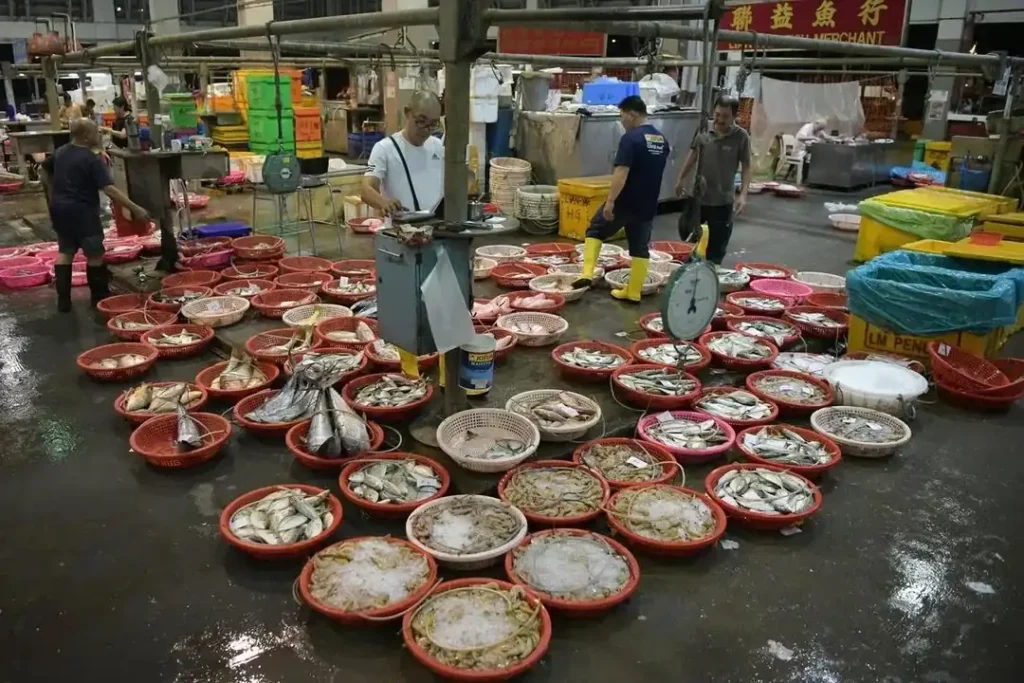
Jurong Fishery Port (JFP) is Singapore’s largest and most important seafood distribution hub, serving as the central point for receiving, handling, and distributing imported and locally landed seafood. Established in 1969, it has been the backbone of the country’s fishing industry and plays a vital role in ensuring a steady supply of fresh fish and seafood for retailers, commercial buyers, restaurants, wet markets, and processors. With a 400-metre wharf and a wholesale fish market spread over approximately 10,000 square metres with around 130 lots, Jurong Fishery Port handles a significant portion of Singapore’s seafood imports and bulk wholesale transactions every day. Its operations are regulated by the Singapore Food Agency (SFA) to ensure safety and quality in the seafood supply chain, making it an essential facility for industry stakeholders and a key contributor to the nation’s food security.
Jurong Fishery Port was established in 1969 at the mouth of the Jurong River to support Singapore’s growing seafood distribution needs. It was built to serve as a major landing, import, and wholesale distribution centre for seafood, complementing other functions in the Jurong industrial area. Over time, it expanded its facilities to include a long wharf capable of accommodating foreign and local fishing vessels, multiple wholesale market lots, storage facilities, ice stalls, and merchant office units. It has evolved into a key node in Singapore’s seafood supply chain, especially after consolidating wholesale operations and handling increasing volumes of imported seafood.
Importancey
Jurong Fishery Port is critically important for commercial buyers, retailers, and the fishing industry because it serves as the primary wholesale market where seafood is traded in bulk.
Commercial Buyers
Jurong Fishery Port functions as a major wholesale procurement hub for bulk seafood traders. Importers and distributors purchase large volumes directly from merchants at the port, allowing them to fulfill ongoing contracts and supply deals. This direct access helps maintain consistency in product quality, volume, and price.
Retailers
For retailers, including wet market stallholders, supermarket chains, and specialty seafood shops, Jurong Fishery Port serves as a crucial sourcing hub for fresh and chilled seafood. Retailers frequently purchase early in the morning or overnight to ensure they secure the best quality stock before it reaches consumer-facing outlets. Daily access to a variety of fish, shellfish, and specialty seafood allows retailers to provide consistent freshness and product diversity to their customers. This helps them maintain competitive pricing, meet seasonal demands, and satisfy customer preferences. The port’s large-scale operations and wholesale pricing make it economically advantageous, allowing small and large retailers alike to maintain profitability and consistent supply.
Food & Hospitality Sector
Restaurants, catering companies, and hotel kitchens depend heavily on Jurong Fishery Port for sourcing both standard and specialty seafood products. From everyday fish varieties to premium shellfish, the port provides chefs with the flexibility to adjust menus according to availability, seasonality, and customer demand. Direct sourcing from the port allows chefs and purchasing managers to negotiate better prices than secondary distributors while ensuring quality and freshness. This accessibility enables hospitality businesses to maintain high culinary standards, introduce new dishes, and experiment with specialty seafood. The port’s wide variety and volume of seafood make it an indispensable partner for Singapore’s foodservice industry.
Influence on Market Pricing & Supply
Jurong Fishery Port handles roughly 30% of Singapore’s seafood imports, giving it significant influence over market pricing, product availability, and supply stability across the country. By serving as the primary wholesale trading hub, the port affects downstream pricing in wet markets, supermarkets, restaurants, and food processing businesses. Its large-scale operations help stabilize supply during seasonal fluctuations or periods of high demand, reducing shortages and ensuring consistent product availability. Retailers and foodservice businesses often time their purchases based on port schedules and availability to optimize pricing. As a central node in Singapore’s seafood ecosystem, Jurong Fishery Port plays a key role in maintaining economic balance and market efficiency.
Strategic Role in the Fishing Industry
The port serves as a centralized platform where seafood from regional fishing vessels and international suppliers is landed, inspected, traded, and redistributed. This makes it an essential link in the broader fishing industry supply chasupporting import logistics, cold storage, transportation fleets, fish merchants, and global trading relationships.
Purpose of the Guide
Helps readers understand how Jurong Fishery Port operates and what to expect during a visit.
Provides practical information on access, port logistics, wholesale markets, and operating procedures.
Covers regulatory requirements, closure schedules, and buyer/visitor guidelines.
Useful for commercial buyers, retailers, restaurateurs, and seafood enthusiasts seeking to engage with the port.
Assists readers in navigating facilities, understanding trading practices, and complying with rules.
Designed to make visiting or co
Closures and Public Holiday Schedules
Jurong Fishery Port operates 24 hours a day year-round, except for a scheduled weekly closure on Monday mornings between 2 am and 6 am to allow for maintenance and administrative functions. This brief closure period is a regular part of the port’s operating cycle and does not affect most trading activities. On public holidays, operations may vary, and buyers are advised to check with port authorities or their regular suppliers ahead of time to confirm availability and schedules, as wet markets and other downstream distribution points may also adjust their operating hours.
Markets & Operations
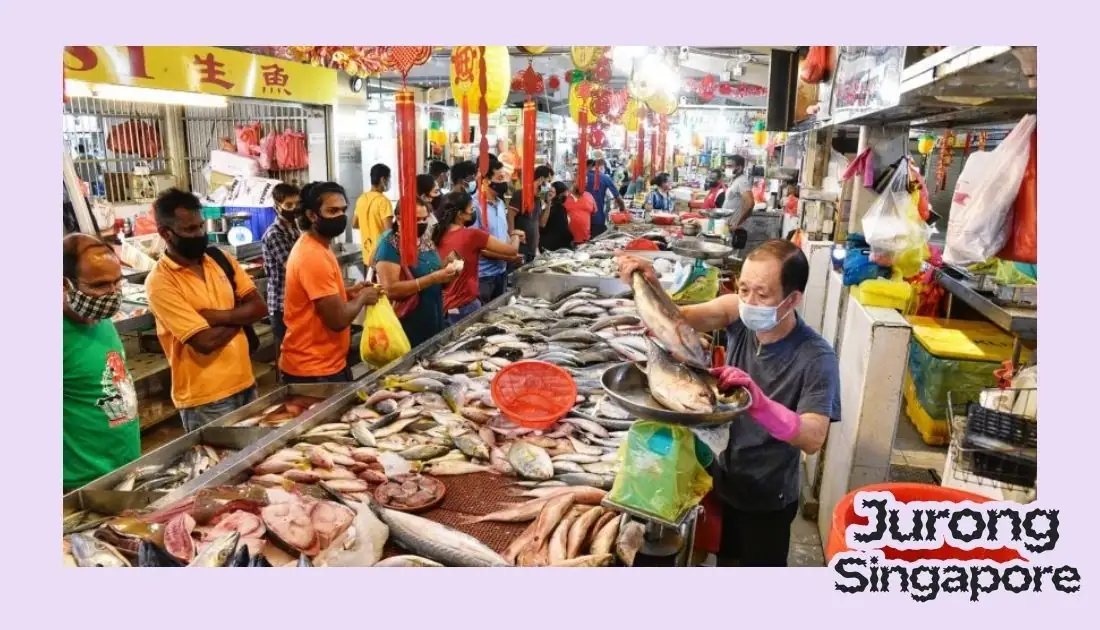
Jurong Fishery Port serves as Singapore’s main wholesale seafood market, handling both local and imported catches. Wholesale operations include bulk fishery trading, storage, and distribution to retailers, restaurants, and processors. The port also supplies wet markets like Hong Lim Market, where seafood is sold to the public. A wide variety of fish, shellfish, crustaceans, and specialty seafood products are available daily, making the port a key hub for the seafood supply chain. Efficient logistics and well-organized market operations ensure freshness and consistent supply for commercial and retail buyers alike.
Hong Lim Market Overview and Trading Practices
Many seafood traders and stallholders from Jurong Fishery Port supply to local wet markets such as Hong Lim Market. These markets operate under different trading practices, selling fresh seafood directly to retail customers. Stallholders often collect their stock early in the morning from Jurong Fishery Port and then bring it to local wet markets for sale to the public. Wholesale buyers rely on these patterns to time their purchases and deliveries, particularly during festive periods or seasonal demand surges.
Wholesale Fishery Operations
JFP’s wholesale operations are at the heart of its function. The port handles a high volume of seafood using stevedoring services, bunkering, and bulk fish handling facilities that enable efficient off-loading from vessels and distribution to merchants and buyers. Fisheries professionals at the port manage complex logistics, coordinate vessel arrivals, and maintain quick turnover of fresh seafood to minimise spoilage.
Types of Seafood and Commercial Products Available
A wide variety of seafood is traded at Jurong Fishery Port, including fresh fish, shellfish, crustaceans, and chilled seafood products imported from countries such as Indonesia, Malaysia, and Thailand. Buyers can find everything from tuna and snapper to prawns, crabs, and specialty catches. The diversity of seafood available makes the port attractive to restaurants, supermarkets, and food processors seeking quality products at competitive wholesale prices.
Regulations & Updates
All seafood trading at Jurong Fishery Port is regulated under prevailing food safety laws, with the Singapore Food Agency (SFA) conducting routine inspections, verifying permits, and ensuring seafood safety from arrival to sale. The port enforces house rules to maintain order and safety for tenants, traders, and visitors. SFA also updates procedures and safety measures, as seen during past closures and enhanced protocols, to respond to public health concerns and operational needs. Authorized access and strict compliance with regulations are necessary for anyone entering or doing business at the port.
Parking Availability and Tips
While Jurong Fishery Port is primarily designed for commercial activity rather than public visiting, there is space allocated for merchant vehicles, trucks, and delivery vehicles. Buyers and visitors operating commercially should arrange parking or vehicle access through their merchant contacts or authorities at the port office. Parking during peak wholesale hours, typically early morning, can be limited, so arriving early and coordinating with port tenants can help secure space. Due to frequent loading and unloading operations, it’s advisable to park in designated areas and be mindful of heavy vehicle movements.
Jurong Fishery Port — Photography
Photography at Jurong Fishery Port is subject to strict guidelines and restrictions to protect operational safety, the privacy of traders, and food safety standards. As a working commercial port with high volumes of fish landing, handling, and wholesale trading, unrestricted photography can interfere with daily activities and pose biosecurity or proprietary concerns for stall operators and port administrators.
In general, unauthorised photography and video recording within port premises is not allowed unless you have explicit permission from port authorities or your host contact (for example, a merchant you are visiting). This applies to cameras, smartphones, drones, and other recording devices. Even when taking photographs from outside public perimeter areas, stay mindful of operations and signage indicating restricted zones.
If you wish to document your visit for personal or editorial purposes, it’s best to request approval in advance from the Singapore Food Agency (SFA) or the relevant port management office. They can advise which areas are permissible for photography, any time restrictions, and any safety or biosecurity protocols you must follow while taking photos.
How to Get
Jurong Fishery Port is located in western Singapore along Jurong Pier Road and is easily accessible by car, taxi, or public transport.
By MRT and Bus
By Car
By Taxi / Ride-Hailing Services
By MRT and Bus
The nearest MRT station to Jurong Fishery Port is Boon Lay MRT (EW27). From there, visitors can take local buses such as 99, 192, or 974, which stop near the port entrance. A short walk from the bus stop leads directly to the main gate.
By Car
Drivers can access the port via the Ayer Rajah Expressway (AYE) toward Jurong, then follow local signage to Jurong Pier Road. Private and commercial vehicles should plan ahead for parking or unloading at designated areas.
By Taxi / Ride-Hailing Services
Taxis or ride-hailing services like Grab can drop passengers directly at the port’s main entrance or guardhouse. This option is convenient for first-time visitors or those carrying goods and equipment.
Tips for First-Time Visitors
For first-time visitors to Jurong Fishery Port, proper planning and preparation are essential to ensure a smooth and efficient experience. Before arriving, it is strongly recommended to coordinate with port merchants or Singapore Food Agency (SFA) authorities to confirm entry permissions, visitor registration, and any specific access requirements. This is particularly important for contractors, commercial buyers, or individuals attending guided tours, as the port operates under strict security and operational protocols.
Arriving early in the morning, ideally before 6 am, is advisable, as peak trading hours can become crowded with commercial buyers, delivery vehicles, and wholesale activity. Early arrival allows visitors to secure parking, navigate the port safely, and access wholesale stalls with minimal disruption. Visitors should also wear appropriate attire, follow all posted safety signage, and remain within authorized areas. Bringing a notepad or camera for approved documentation, and planning your visit in advance, can help first-time visitors maximize the efficiency and value of their trip to the port.
Frequently Asked Questions
1. Can the public visit Jurong Fishery Port?
Generally, the port is restricted to commercial buyers, traders, and authorised personnel. Visitors must coordinate with merchants or SFA authorities to gain access.
2. What are the operating hours of Jurong Fishery Port?
The port operates 24 hours daily, with a short weekly closure on Monday mornings for maintenance. Public holidays may affect operating hours, so it’s best to check in advance.
3. What types of seafood are available?
Jurong Fishery Port offers a wide variety of seafood, including fresh and chilled fish, shellfish, crustaceans, and specialty imports from regional suppliers.
4. Is photography allowed at the port?
Photography is strictly prohibited without prior permission from port authorities or merchants. Requests for documentation should be arranged in advance and follow all safety and biosecurity protocols.
Conclusion
Jurong Fishery Port is the heart of Singapore’s seafood supply chain, serving as a vital hub for wholesale trading, import distribution, and commercial supply. It plays a critical role for retailers, restaurants, importers, and foodservice operators, offering a wide variety of fresh and specialty seafood. Access is regulated to ensure safety, quality, and smooth operations, with clear protocols for visitors, contractors, and buyers.
Understanding the port’s layout, trading practices, and operational rules helps first-time visitors navigate efficiently. By maintaining a high standard of logistics, hygiene, and market operations, Jurong Fishery Port ensures a consistent and reliable supply of seafood across Singapore. Its combination of scale, variety, and regulatory oversight underscores its importance not only to the fishing industry but also to the nation’s food security and culinary ecosystem.