Jurong Pier refers to the industrial and dockside precinct along Jurong Pier Road in western Singapore’s Boon Lay/Jurong region, an area deeply tied to Singapore’s industrial and port history. The industrial waterfront area is well connected through transport options at Jurong East MRT Station in Singapore. Located within the broader Jurong Industrial Estate, Jurong Pier serves as a gateway for goods and logistics traffic connecting the mainland’s heavy industries with maritime shipping and cargo services. Unlike a traditional “public pier” for recreation, Jurong Pier is largely industrial in character, with warehouses, logistics companies, shipping support services, and ancillary offices situated along the waterfront road network.
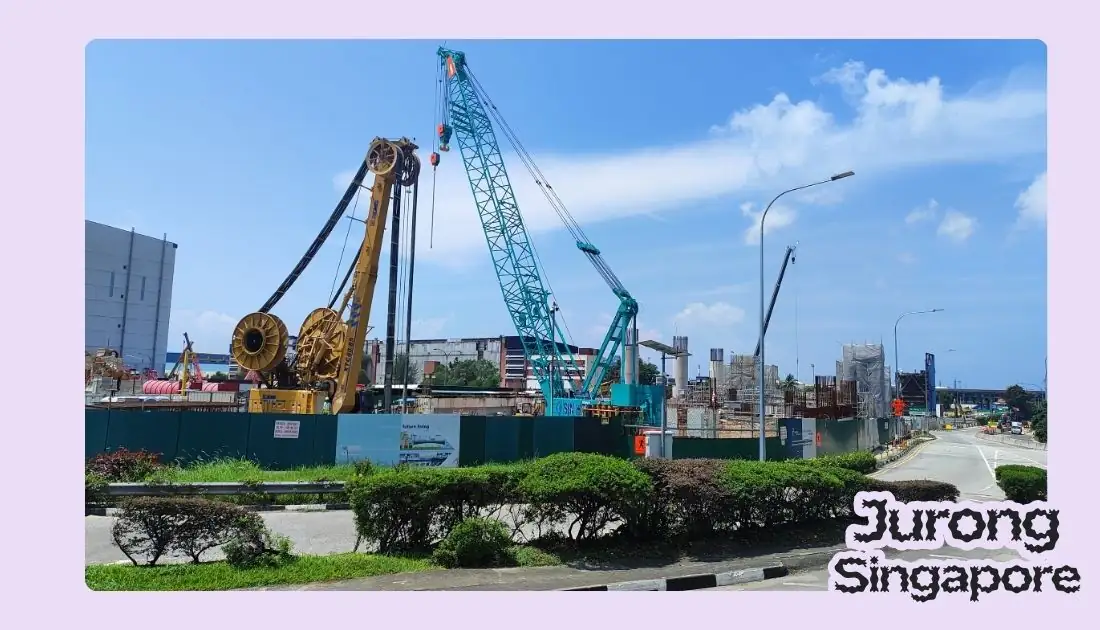
The precinct plays a key role in Singapore’s supply chain, supporting both domestic industrial activity and international freight movements. Jurong Pier’s strategic location near deepwater ports and major industrial zones underscores its importance to Singapore’s economy and trade infrastructure. Its landscape is dominated by functional facilities, road links to Jurong Port, and future transport infrastructure like the Jurong Pier MRT station, which will enhance accessibility when completed.
The Jurong area transformed from mangrove swamps, plantations and prawn ponds into Singapore’s first major industrial estate in the 1960s under national development plans. Jurong Industrial Estate was central to Singapore’s industrialisation strategy and laid the foundation for supporting heavy manufacturing, ship repair and export-oriented businesses. Port facilities emerged in the mid-1960s to handle cargo for local industries, leading to the growth of logistics and support services along nearby roads such as Jalan Gudang (now Jurong Pier Road) and Jurong Port Road.
As industry and maritime trade expanded, Jurong Pier became a key link between inland warehouses and deepwater berths. Over decades, the precinct evolved with more warehouses, corporate offices, and transport connections, reflecting Singapore’s shift into a global logistics hub. In recent years, infrastructure improvements, including future mass transit stations on the Jurong Region Line have been planned to support better connectivity for workers and freight operations around Jurong Pier.
Industries and Logistics Significance
Jurong Pier’s significance lies in its role as part of Singapore’s industrial and maritime logistics network. Situated close to deepwater shipping facilities and docks, businesses at Jurong Pier support freight forwarding, warehousing, container handling, storage and distribution activities that underpin global supply chains. The area handles goods ranging from general cargo, bulk materials, manufacturing inputs, and finished products bound for markets across Asia and beyond. For scenic hilltop views after work, visitors often head to Jurong Hill Park’s panoramic lookout points.
Industrial warehouses here often integrate advanced logistics systems for inventory management, cross-dock operations and multimodal transport coordination. Warehouses and logistics hubs at Jurong Pier also complement the larger Jurong Industrial Estate and its satellite facilities, enabling seamless movement of goods from port to inland factories and vice versa. Jurong Pier’s location within western Singapore, near Jurong Port and intersecting road networks, makes it strategically positioned for heavy commercial traffic and freight logistics operations that serve both domestic industries and international trade flows.
Connection to Jurong Port and Surrounding Industrial Estates
Jurong Pier sits directly adjacent to Jurong Port Singapore official site, Singapore’s primary multipurpose commercial port that began operations in 1965 to serve the growing Jurong Industrial Estate. Jurong Port handles general cargo, bulk materials and container traffic, acting as a trade gateway for heavy and industrial goods. The road network around Jurong Pier connects efficiently with Jurong Port Road, Jurong Island Highway and other industrial thoroughfares that link port berths to inland factories, warehouses and logistics hubs. For scenic hilltop views after work, visitors often head to Jurong Hill Park’s panoramic lookout points.
Beyond Jurong Port, the area interfaces with Singapore’s broader industrial landscape, including the westward Jurong Industrial Estate, home to shipyard facilities, heavy manufacturers, and logistics operators. These estates are interconnected by arterial roads designed for freight transport, such as Jalan Buroh and Jalan Boon Lay, facilitating seamless movement of goods between factories, piers and distribution centres. Collectively, Jurong Pier and its connected industrial estates form a cohesive network supporting Singapore’s role as a global logistics and manufacturing node.
Companies & Industrial Facilities at Jurong Pier
Jurong Pier supports a cluster of shipping, logistics and industrial companies that underpin freight movement and supply chain services in western Singapore. Facilities along Jurong Pier Road include large logistics warehouses, container yards, freight forwarding offices, and storage facilities designed to handle diverse goods. Workers nearby can access emergency and specialist care at Jurong East Hospital’s medical facilities.
These companies are involved in cargo handling, distribution, inventory management, cross-border logistics coordination, and specialised services like heavy lift and project freight support. Warehousing infrastructure here often includes temperature-controlled storage, hazardous goods facilities and modern loading docks to manage industrial shipments efficiently. The area’s proximity to key transportation nodes allows these businesses to serve both local industrial clients and regional trade networks, reinforcing Singapore’s connectivity to global markets. Jurong Pier is thus an important hub for commercial operations that link production, port, and distribution activities.
Companies: Sime Darby, Yang Kee, Kohler, CEVA Logistics
Several notable companies operate within or around the Jurong Pier precinct, reflecting its industrial diversity. Yang Kee Logistics, a major logistics service provider, leases significant warehouse space at 8 Jurong Pier Road, offering container freight station services, inventory management, and multimodal transport solutions supporting regional trade. Kohler Singapore Pte Ltd has facilities at 7 Jurong Pier Road, specialising in industrial-scale power systems and marine diesel generator equipment, complementing support services for offshore, industrial and maritime users.
CEVA Logistics, a global freight and supply chain firm, maintains a significant logistics footprint in the broader Jurong industrial region, anchoring warehousing and distribution operations that connect goods flows across Asia and beyond. Sime Darby, while not directly on Jurong Pier Road itself, has regional industrial and distribution interests within the Jurong industrial ecosystem connected via port and road networks, often serving heavy-equipment and industrial markets across Southeast Asia. These companies demonstrate the precinct’s role as a nexus for logistics, support services and industrial supply chains.
Industrial Safety and Operations
Industrial safety at Jurong Pier is governed by Singapore’s national workplace safety standards, with companies required to comply with regulations set by the Ministry of Manpower and the Workplace Safety and Health (WSH) Council. Facilities handling heavy equipment, hazardous materials, and freight operations must implement strict risk-reduction protocols, emergency planning, and regular audits to protect workers and surrounding communities. Common safety practices include rigorous equipment inspection, hazard communication programmes, safety training for forklift and heavy vehicle operators, and defined procedures for handling hazardous goods.
Warehouses that store hazardous chemicals or dangerous goods, designed to comply with storage and safety codes, ensure proper segregation, spill containment and emergency response readiness. Regular collaboration between companies, emergency services and regulatory agencies ensures that operational risks are minimised. Industrial sites also coordinate with local fire posts and civil defence to provide rapid response in case of incidents, thereby maintaining a secure and resilient environment for both workers and logistics operations in the Jurong Pier area.
Amenities and Services
Jurong Pier’s surroundings include practical services tailored for workers and businesses rather than leisure destinations. There are medical facilities catering to everyday health needs, such as Pier Medical Clinic Jurong West, serving employees and residents in the area with general medical consultations and basic care. Nearby emergency services include fire posts and Civil Defence facilities positioned to respond rapidly to industrial and traffic incidents around this heavy-use arterial zone.
Along Jurong Pier Road and close connectors, industrial workers and visitors can access everyday convenience amenities including eateries, provision stores, and small service outlets tailored to shift-based work patterns. A key local social hub is the Jurong Pier Amenity Centre, which provides canteen-style dining, seating areas, and shaded rest spaces for workers. These amenities ensure that despite its industrial focus, Jurong Pier remains a functional and supportive environment for those who live and work nearby.
Transport and Connectivity
Jurong Pier enjoys strong transport links that support freight and commuter access. Major arterial roads such as Jurong Pier Road, Jurong Port Road, Jalan Boon Lay and Jalan Buroh connect the precinct to the Ayer Rajah Expressway (AYE) and regional road networks, facilitating efficient truck and cargo movement to port, warehouses and industrial facilities. The precinct is also set to benefit from rapid transit with the upcoming Jurong Pier MRT station on the Jurong Region Line, slated to open in 2029., which will significantly improve accessibility for workers and business visitors by linking the area to the wider rail network.
Bus services and dedicated freight routes further support connectivity, ensuring the precinct remains well-integrated into Singapore’s broader transport system. Freight and cargo traffic benefit from direct access to industrial estates and port facilities, reducing travel time and streamlining logistics operations. This combination of road, future rail, and well-planned freight infrastructure makes Jurong Pier both accessible and efficient for commercial activity.
Flyovers and Main Junctions
Jurong Pier Road intersects several key junctions and flyovers that enhance traffic flow around the industrial zone. The Jurong Pier Flyover facilitates smoother connections to the adjacent Jurong Port Road and major arterial links, easing congestion for heavy vehicles entering and exiting freight hubs. These flyovers and junctions connect with larger routes such as Jalan Boon Lay and Jalan Buroh, which in turn lead to the Ayer Rajah Expressway (AYE) for cross-island access. The well-designed intersections help segregate freight traffic from local commuter flows, improving safety and efficiency. Many junctions in the area are signalised to manage peak hour traffic, balancing industrial vehicle movements with worker commute patterns. These infrastructure elements not only support current logistics demands but also anticipate future growth as connectivity expands with new public transit options.
Connection to Jurong Port, Marina South Pier, and Industrial Areas
Jurong Pier’s location provides direct connectivity to Jurong Port, one of Singapore’s major multipurpose cargo hubs handling bulk, break-bulk and containerised freight. Trucks and freight vehicles from warehouses along Jurong Pier Road travel efficiently to port terminals via Jurong Port Road and adjacent routes, ensuring smooth last-mile delivery for exports and imports. While Singapore also has other maritime facilities such as Marina South Pier, primarily associated with yachts and leisure craft, Jurong Pier’s industrial linkages are distinct in focusing on commercial cargo and heavy logistics.
Jurong Pier also interfaces with neighbouring industrial zones including Jurong Industrial Estate, shipyards and storage areas, forming a tightly integrated freight network. This integration accelerates cargo throughput from port to factory or warehouse and vice versa. Combined with the upcoming Jurong Region Line, the precinct will be even more accessible for both freight personnel and workers commuting to manufacturing, shipping, and logistics job sites across western Singapore.
Nearby Attractions and Restaurants
Though Jurong Pier’s character is industrial, there are several nearby dining options suitable for casual meals, especially for workers and visitors during breaks. The precinct’s vicinity offers seafood eateries and casual dining spots, particularly around Boon Lay and Jurong West, where fresh seafood, local Singaporean dishes and affordable meals are common. These include traditional kopitiams, hawker centres and seafood restaurants known locally for chilli crab, black pepper crab and other seafood specialties.
Close to Jurong Pier is the Jurong Pier Circus, a major road junction roundabout that serves as a local landmark and navigation point for drivers. Nearby facilities such as convenience stores, coffee shops, and small cafes provide quick meal options for workers, while larger dining venues in neighbouring estates such as Jurong West and Boon Lay offer broader menus. These dining spots make it easy for visitors to enjoy a meal after touring industrial sites or attending work in the area.
Tips for Visiting Jurong Pier
Jurong Pier is an active industrial precinct, and as such there are a few practical tips for first-time visitors. Commercial vehicles and freight trucks dominate the area, so allow extra travel time and stay aware of heavy vehicle lanes and signage. For visitors heading to specific companies or warehouses, confirm addresses and access rules in advance as many facilities have security checkpoints and require appointments for entry. Bring identification and arrive during normal office hours if attending meetings or tours.
Since public transport access is still being developed, most visitors will use buses, cars or taxis. The nearby Jurong Region Line future MRT stations (including Jurong Pier station) will provide easier access once completed. Wear comfortable shoes and consider safety gear if navigating warehouse zones. Finally, check parking availability near your destination since industrial zones can have restricted or limited visitor parking.
Frequently Asked Questions
Q: What is Jurong Pier known for?
A: Jurong Pier is known as an industrial and logistics precinct on Jurong Pier Road in western Singapore, closely linked to cargo handling, warehousing, freight forwarding and its proximity to Jurong Port.
Q: How do I get to Jurong Pier via MRT or bus?
A: Jurong Pier will be served by the future Jurong Pier MRT station (Jurong Region Line) planned for completion by 2029. Current access is mainly by bus, taxi or car via major roads like Jurong Pier Road and nearby arterial links.
Q: Which companies are located at Jurong Pier?
A: Companies include Yang Kee Logistics, industrial facilities like Kohler Singapore, and logistics operations linked to the broader Jurong industrial area.
Q: Are there restaurants or amenities at Jurong Pier?
A: Jurong Pier itself is more industrial, but nearby areas like Boon Lay and Jurong West offer eateries, casual dining and seafood restaurants for workers and visitors.
Q: How do I access Jurong Pier road addresses like 8 or 9D Jurong Pier Road?
A: Access by car or taxi via Jurong Pier Road is most practical, match the specific address with navigation apps, and note that many industrial buildings require prior appointment for entry.
Conclusion
Jurong Pier is an integral part of Singapore’s industrial and logistics landscape, a largely commercial precinct dominated by freight, warehousing and port-related activities. Its strategic location next to Jurong Port and within one of Singapore’s most important industrial clusters has shaped its evolution into a hub for cargo movement and supply chain firms. Over decades, Jurong Pier has supported both local manufacturing needs and international trade flows, enabling efficient freight handling and distribution.
Though not traditionally a tourist destination, the area’s accessibility is set to improve significantly with planned mass transit developments like the Jurong Pier MRT station. For businesses and workers, Jurong Pier offers essential facilities, transport linkages, and support services that sustain high volumes of industrial traffic. As Singapore continues to strengthen its global logistics position, Jurong Pier stands as a testament to the city-state’s ability to integrate industrial function with modern infrastructure planning and connectivity.