Jurong Mosque | Prayer Times, Facilities & Community Programs
Jurong, a vibrant district in western Singapore, is home to a diverse Muslim community supported by a network of mosques catering to both spiritual and social needs. Mosques in Jurong serve as places of worship, educational centers, and community hubs, providing services for daily prayers, religious learning, and social programs. With the district’s strategic location, including Jurong East MRT and Jurong West bus interchanges, mosques are easily accessible to residents from surrounding estates. These mosques offer a variety of programs for children, youth, and adults, including Quranic classes, Arabic learning, and family-oriented activities. Beyond worship, they host community events, charity initiatives, and interfaith engagement programs, contributing to the social cohesion of Jurong. From small neighborhood mosques to larger community mosques and mosque learning centers, Jurong’s Islamic institutions meet the diverse spiritual, educational, and social needs of the local Muslim population.
Mosques in Jurong
Table of Contents
ToggleJurong hosts several types of mosques, each serving unique roles within the community.
Jurong East Mosques
Jurong East features several mosques serving a diverse population of residents, students, and professionals. Major mosques include Al-Mukminin Mosque, Assyakirin Mosque, and smaller neighborhood mosques like Taman Jurong Mosque. These mosques are accessible via Jurong East MRT, nearby bus interchanges, and walking routes from residential estates. They provide regular prayers, Friday sermons, Quranic and Arabic classes, and community programs for families, youth, and adults. Facilities include prayer halls, learning classrooms, multipurpose halls, and ablution areas. The mosques actively engage with the local Muslim community through religious education, charity initiatives, and family-oriented programs, enhancing spiritual life and social cohesion in Jurong East.
Al-Mukminin Mosque Jurong East
Al-Mukminin Mosque serves as one of the primary Islamic worship centers in Jurong East. It accommodates a large congregation for daily prayers, Friday sermons, and special events such as Ramadan tarawih prayers and Eid celebrations. The mosque emphasizes both worship and community development, providing educational programs for children, youth, and adults. Its programs include Quranic recitation classes, Arabic language courses, and family-oriented initiatives. The mosque also participates in charity drives, counseling services, and interfaith engagements. Located within walking distance of Jurong East MRT and bus interchange, Al-Mukminin Mosque is easily accessible to residents and commuters. It provides a welcoming environment for newcomers, families, and students seeking spiritual growth and active community participation. After prayers, many families spend time outdoors at Jurong Lake Gardens.
Prayer Hall Size, Facilities, and Child Learning Programs
Al-Mukminin Mosque features a spacious main prayer hall that accommodates several hundred worshippers, with designated areas for men and women. Ablution facilities are modern, with separate sections for adults and children to ensure convenience. The mosque includes multipurpose halls for community events, lectures, and interfaith programs. Child-focused learning programs are an essential aspect of the mosque’s activities, offering Quranic recitation (Tajweed), Hifz memorization classes, and basic Arabic literacy lessons. Youth and adult programs run concurrently, allowing families to participate in religious education together. Facilities also include a small library with Islamic books and resources, classrooms for structured learning, and dedicated spaces for counseling and guidance. The mosque employs certified instructors for Quranic and Arabic lessons, ensuring quality education. These facilities combine to make Al-Mukminin Mosque a hub for both worship and holistic Islamic learning for the community.
Directions from Jurong East MRT and Bus Interchange
Al-Mukminin Mosque is located within walking distance of Jurong East MRT (NS/EW Lines) and the Jurong East Bus Interchange. From the MRT, exit at Jurong East Station, East Lobby, and walk approximately 600 meters south along Jurong Gateway Road. The mosque is visible from the main road and is accessible via pedestrian pathways. Bus services from the interchange, including bus 154 and 183, stop near the mosque’s main entrance. Taxi and ride-hailing options are available at both MRT exits. The mosque is wheelchair accessible, with ramps and barrier-free access for all visitors. Walking time from the MRT is about 7–10 minutes, making it convenient for daily prayers.
Assyakirin Mosque Jurong East
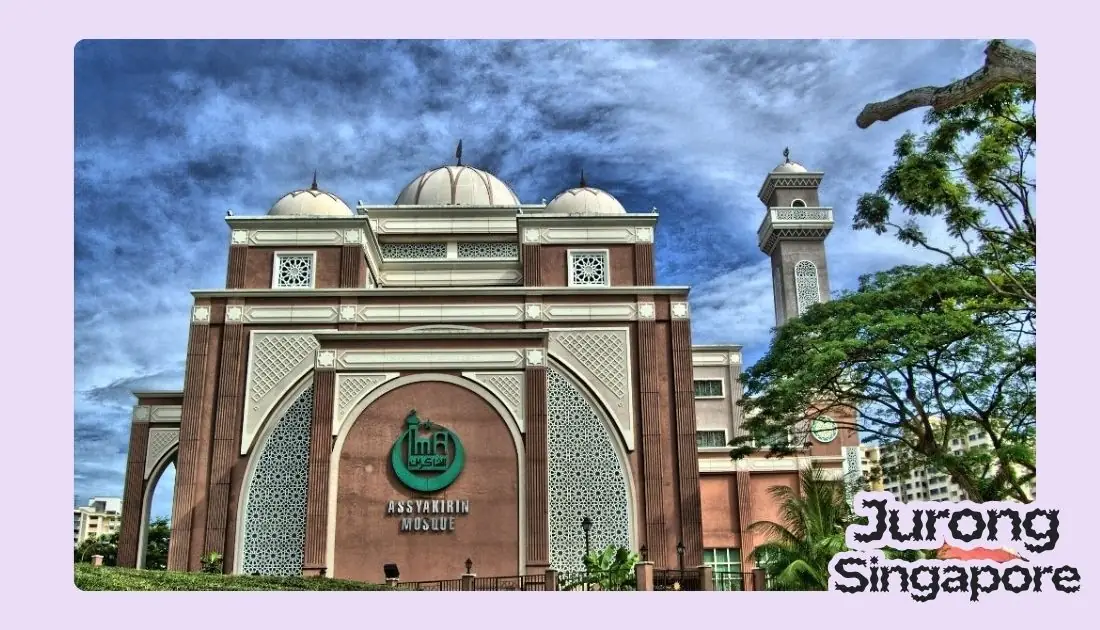
Assyakirin Mosque serves the Jurong East community with daily prayers, Friday sermons, and educational programs. It offers bilingual Quranic classes, Arabic lessons, and youth engagement activities. The mosque also hosts family programs, community events, and lectures on Islamic ethics. Facilities include a medium-sized prayer hall, ablution areas, classrooms for children, and multipurpose halls for community gatherings. The mosque emphasizes spiritual education alongside social engagement, fostering a supportive environment for worshippers of all ages. Accessibility is convenient via Jurong East MRT and nearby bus services, and parking is available for visitors. Assyakirin Mosque is known for its welcoming atmosphere and active participation in local charity and outreach initiatives.
Facilities for Community Events
- Multipurpose halls for lectures, seminars, and social events
- Classrooms for Quranic and Arabic learning
- Counseling and guidance rooms
- Ablution facilities with child-friendly sections
- Spaces for youth activities and family workshops
- Charity drive collection and distribution areas
- Library with Islamic reference materials
- Prayer hall that accommodates medium-sized congregations
Programs for Adults and Children
- Quranic recitation classes for children and teens
- Hifz memorization programs for young learners
- Arabic language courses for adults and youth
- Tafsir (Quranic interpretation) sessions for adults
- Family-oriented religious workshops
- Youth leadership and mentorship programs
- Weekend Islamic studies for children
- Community engagement projects and volunteer opportunities
Key Features and Accessibility
Taman Jurong Mosque and neighborhood mosques are smaller yet essential to daily worship within the community. They provide convenient access for residents in Jurong East estates, often within walking distance of HDB flats and local amenities. Facilities include modest prayer halls, ablution areas, and small classrooms for Quranic and Arabic lessons. These mosques conduct daily prayers, Friday sermons, and occasional community events. Accessibility is enhanced by proximity to bus stops and pedestrian pathways, making it easy for students, families, and seniors to attend. Many mosques offer child-friendly programs, women’s classes, and youth activities. Parking may be limited, so public transport is recommended. These mosques play a vital role in fostering spiritual growth, social cohesion, and educational development in the neighborhoods they serve.
Neighborhood Mosques
Jurong is home to several neighborhood mosques that serve the local Muslim community. These mosques provide daily prayers, Friday congregational services, and religious guidance for residents of all ages. Many also offer Quranic classes, youth programs, and community events to foster social and spiritual engagement. Facilities are designed to be accessible and welcoming, supporting both worship and community activities. These mosques play an important role in strengthening community bonds in the Jurong area. Recreational facilities nearby include Jurong Stadium for sports and events.
Community Mosques
Community mosques in Jurong are larger facilities designed to accommodate a broad range of congregants. They host daily prayers, Friday sermons, Ramadan activities, and Eid celebrations, often serving hundreds or even thousands of worshippers. Beyond prayer, community mosques organize social programs such as charity drives, counseling, and workshops for youth and adults. These mosques typically include multipurpose halls, classrooms for religious education, libraries, and ablution facilities to support large-scale gatherings. They act as central hubs for the Muslim community, fostering engagement, outreach, and intergenerational learning. The architecture and design often reflect traditional Islamic aesthetics while integrating modern facilities, ensuring accessibility and comfort for all visitors.
Mosque Learning Centers
Mosque learning centers focus on religious education and skill development for children, youth, and adults. These centers provide Quranic recitation classes, memorization programs (Hifz), Arabic language courses, and Islamic studies lessons. Many learning centers operate after school hours and during weekends, offering structured curricula with certified instructors. Adult programs include tafsir (Quranic interpretation), fiqh (Islamic jurisprudence), and lectures on family and social ethics. Learning centers often collaborate with community mosques to integrate educational programs with spiritual and social initiatives. They emphasize character building, religious literacy, and community values, preparing participants to live Islamically while contributing to society. Facilities usually include classrooms, libraries, and prayer areas for study and practice. For leisure and fitness, residents also visit swimming pools around Jurong.
Tips for First-Time Visitors
Visitors should arrive at least 10–15 minutes before prayer times, particularly Friday prayers or Ramadan events. Modest dress is recommended, with women covering hair and wearing long clothing, and men in respectful attire. Shoes must be removed before entering the prayer hall. Visitors may bring prayer mats or use mosque-provided mats. Non-Muslim visitors should be mindful of mosque etiquette, avoiding disruptions and maintaining a respectful demeanor. During community events or classes, it is polite to observe quietly and follow instructions from mosque staff. In smaller neighborhood mosques, seating may be limited, so early arrival is advised. Parking can be tight, so using nearby bus stops or walking routes is convenient.
Jurong West Mosques
Jurong West has experienced a growth of mosques to accommodate its expanding Muslim population. New mosques and neighborhood prayer facilities serve daily prayers, Friday sermons, and community programs. Major mosques include larger community mosques with classrooms and multipurpose halls, while smaller neighborhood mosques offer convenient access for residents. These mosques also host Quranic and Arabic classes for children, adult religious lectures, and family-oriented programs. Accessibility is enhanced by proximity to bus interchanges and residential areas. They function as centers of spiritual, educational, and social engagement for the Jurong West community.
New Mosques in Jurong West
New mosques in Jurong West provide modern facilities, including large prayer halls, classrooms, ablution areas, and multipurpose community spaces. They serve daily prayers, Friday sermons, and special religious events. Educational programs for children and adults, including Quranic and Arabic learning, are a major focus. Youth programs, community service initiatives, and interfaith engagement activities are conducted regularly. The design often incorporates accessibility features for seniors and differently-abled worshippers. These mosques are strategically located near residential estates for easy access. Their development reflects the growing Muslim population in Jurong West and the need for comprehensive facilities supporting worship, learning, and social cohesion.
Prayer Times and Community Services
- Five daily prayers observed, with notifications via mosque apps or notice boards
- Friday sermons conducted in Malay, English, or Arabic depending on congregation
- Taraweeh prayers during Ramadan
- Quranic and Arabic classes for children after school
- Adult Islamic studies, tafsir, and fiqh courses
- Family and youth programs including mentoring and lectures
- Community services: charity drives, health awareness programs, and volunteer projects
- Special religious lectures during Ramadan and Eid celebrations
Prayer Times, Facilities & Programs
Major Jurong mosques follow standard daily prayer schedules: Fajr (dawn), Dhuhr (midday), Asr (afternoon), Maghrib (sunset), and Isha (night). Friday sermons replace Dhuhr prayers. Ramadan schedules include Taraweeh, Qiyam-ul-Lail, and Iftar programs. Facilities include spacious prayer halls, ablution areas, classrooms, and multipurpose halls. Programs for adults and children cover Quranic recitation, Arabic learning, and Islamic studies. Youth programs include mentorship, workshops, and family-oriented activities. Mosques also conduct charity drives, counseling sessions, and health awareness programs. Libraries and study spaces provide resources for religious education. Collectively, these programs support spiritual, educational, and social development for residents of Jurong East and West.
Quranic and Arabic Learning Programs for Children and Adults
Quranic and Arabic learning is a core component of Jurong mosques’ educational programs. Children participate in structured Tajweed classes, Hifz memorization, and Arabic reading lessons, often segmented by age group for effective learning. Weekend and after-school classes are available to accommodate students’ schedules. Adult programs include Arabic literacy, Quranic tafsir, fiqh studies, and specialized lectures. Qualified instructors lead classes, providing personalized attention where possible. Mosques employ interactive teaching methods, including multimedia tools, recitation exercises, and group discussions. These programs foster spiritual development, enhance understanding of Islamic teachings, and strengthen community bonds. Family participation is encouraged through joint study sessions and community events. Quranic competitions, exhibitions, and awards motivate students to excel. Many mosques also collaborate with educational centers to ensure standardized curricula. These programs nurture religious literacy while promoting lifelong learning for all age groups.
Directions & Accessibility
Jurong mosques are accessible via MRT, bus interchanges, and walking routes from residential estates. Jurong East mosques are near Jurong East MRT (NS/EW Lines) and bus interchange, with pedestrian pathways connecting estates and shopping areas. Jurong West mosques are near Boon Lay MRT and surrounding bus routes. Walking distances from HDB estates generally range 5–15 minutes. Key landmarks such as Jurong Point, Lakeside, and Jurong Industrial Estate serve as reference points. Most mosques provide clear signage and pedestrian access, making navigation straightforward. Ride-hailing and taxi services offer additional convenience. Neighborhood mosques focus on estate accessibility, while larger community mosques also accommodate mass events. These transport links enable residents, students, and visitors to attend prayers, educational programs, and community activities efficiently.
Parking and Accessibility Tips
- Parking availability varies; larger mosques often provide designated parking lots
- Use public transport (MRT and buses) for convenience and limited parking situations
- Walking paths from nearby residential areas are pedestrian-friendly
- Wheelchair ramps and barrier-free access are standard in modern mosques
- Arrive early during Friday prayers, Ramadan, and Eid celebrations for seating
- Check mosque notice boards or websites for event-specific guidance
- Use ride-hailing options if driving is not practical
- Follow mosque etiquette for entry, including modest dress and shoe removal
Frequently Asked Questions
What are the prayer times for Jurong East mosques?
Fajr, Dhuhr, Asr, Maghrib, Isha; Friday sermons replace Dhuhr prayer. Ramadan includes Taraweeh and Qiyam-ul-Lail.
Where is the nearest mosque in Jurong West?
Neighborhood mosques and new community mosques near Boon Lay MRT and Jurong West estates.
Which mosques offer Arabic learning for children?
Al-Mukminin Mosque, Assyakirin Mosque, Taman Jurong Mosque, and Jurong West mosques offer structured Arabic and Quranic programs.
How to get to Al-Mukminin Mosque from Jurong East MRT?
Exit at Jurong East Station, walk ~600 meters south along Jurong Gateway Road, or take buses 154/183.
Are there community programs or classes at Jurong mosques?
Yes, adult lectures, youth mentorship, Quranic and Arabic classes, charity drives, family programs, and community events.
Conclusion
Jurong’s mosques play an essential role in supporting the spiritual, educational, and social needs of the Muslim community. From large community mosques such as Al-Mukminin Mosque and Assyakirin Mosque to smaller neighborhood mosques like Taman Jurong Mosque, residents have convenient access to prayer facilities, Quranic and Arabic classes, youth and family programs, and community services. These mosques are strategically located near MRT stations, bus interchanges, and residential areas, ensuring accessibility for worshippers of all ages. Facilities include prayer halls, classrooms, multipurpose halls, and ablution areas, providing a holistic environment for worship, learning, and community engagement. Programs foster spiritual growth, literacy,